Full water-path review
Fill, circulation, filtration, drainage, and leak points are considered as one system.
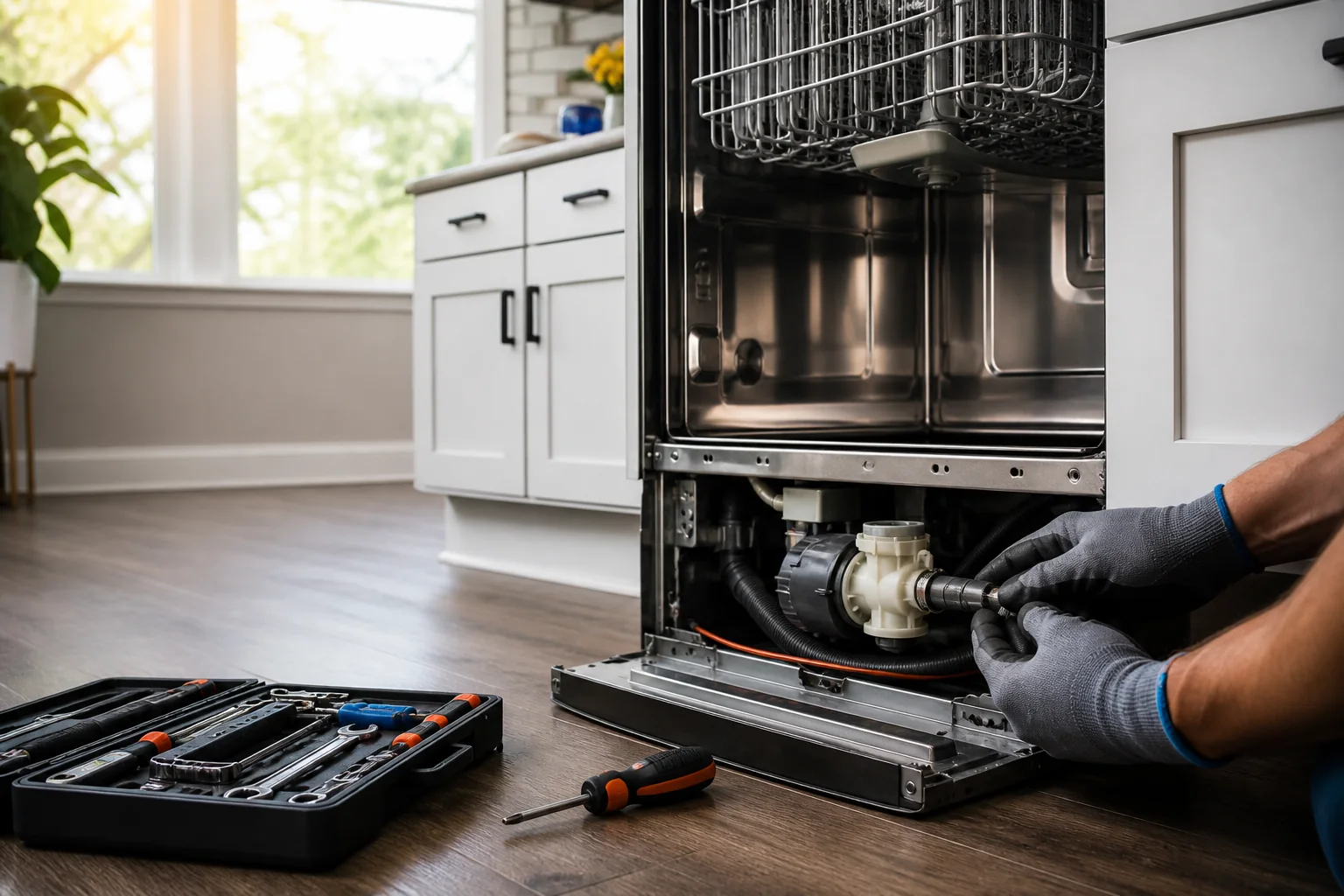
Dishwashers combine water, heat, drainage, spraying, detergent, and door safety in a tight cabinet opening. A useful diagnosis checks the full wash path and the installation around it.
Cloudy dishes, standing water, poor drying, leaks, and unusual noise can come from loading and maintenance, a blocked filter or drain, a worn pump, a valve, sensor, heater, seal, or control. The service plan identifies which part of the cycle is not completing as designed.
Hard-water mineral deposits can affect spray openings, filters, valves, and cleaning results in the region. High-loop or air-gap configuration, disposer connections, cabinet access, flooring, and shutoff location also influence how a built-in unit drains and how it can be removed safely.
Fill, circulation, filtration, drainage, and leak points are considered as one system.
Water temperature, loading, detergent, mineral buildup, and mechanical performance are separated.
Flooring, mounting, supply, drain routing, and surrounding cabinetry are protected during access.
Stop using equipment that is leaking, smoking, arcing, repeatedly tripping power, or creating a fuel odor. Address immediate safety concerns before routine scheduling.
The exact work depends on the appliance, access, diagnosis, and part availability. The recommended scope is reviewed before repair work proceeds.
Discuss My ApplianceUseful model information, clear access, and an accurate symptom history help the diagnostic process move efficiently.
If safe, leave standing water or the error code as found and avoid repeatedly restarting a leaking unit.
Water entry, circulation, heat, drainage, door safety, and installation conditions are checked against the symptom.
Authorized work is performed or scheduled, followed by an appropriate operational and leak check.
Replacement components and installation materials must be appropriate for the appliance. A diagnosis determines what is actually needed.
Not sure whether this is the right service? Send the appliance type, model if available, a photo, and a short description so the team can confirm the best next step.
Ask about your appliance →These answers address common preparation, safety, and service questions for this appliance.
A small amount in the sump can be normal, but visible standing water may involve the filter, drain hose, sink connection, pump, check valve, or control. Avoid chemical drain cleaners in the appliance.
Yes. Mineral film can resemble poor washing. Filter condition, spray action, water temperature, detergent, rinse aid, and hardness should be considered before blaming one component.
No. Stop use and shut off the appliance water supply if it can be done safely. A technician can choose a controlled way to reproduce the leak while protecting the surrounding area.
Yes. Remove dishes and loose items, clear the floor in front, and make the sink cabinet accessible because the supply and drain connections are often located there.
Tell us what the appliance is doing, where you are located, and when you would like service.