Measured temperature
Observed performance is compared with the appliance controls instead of judging by one cooking result.
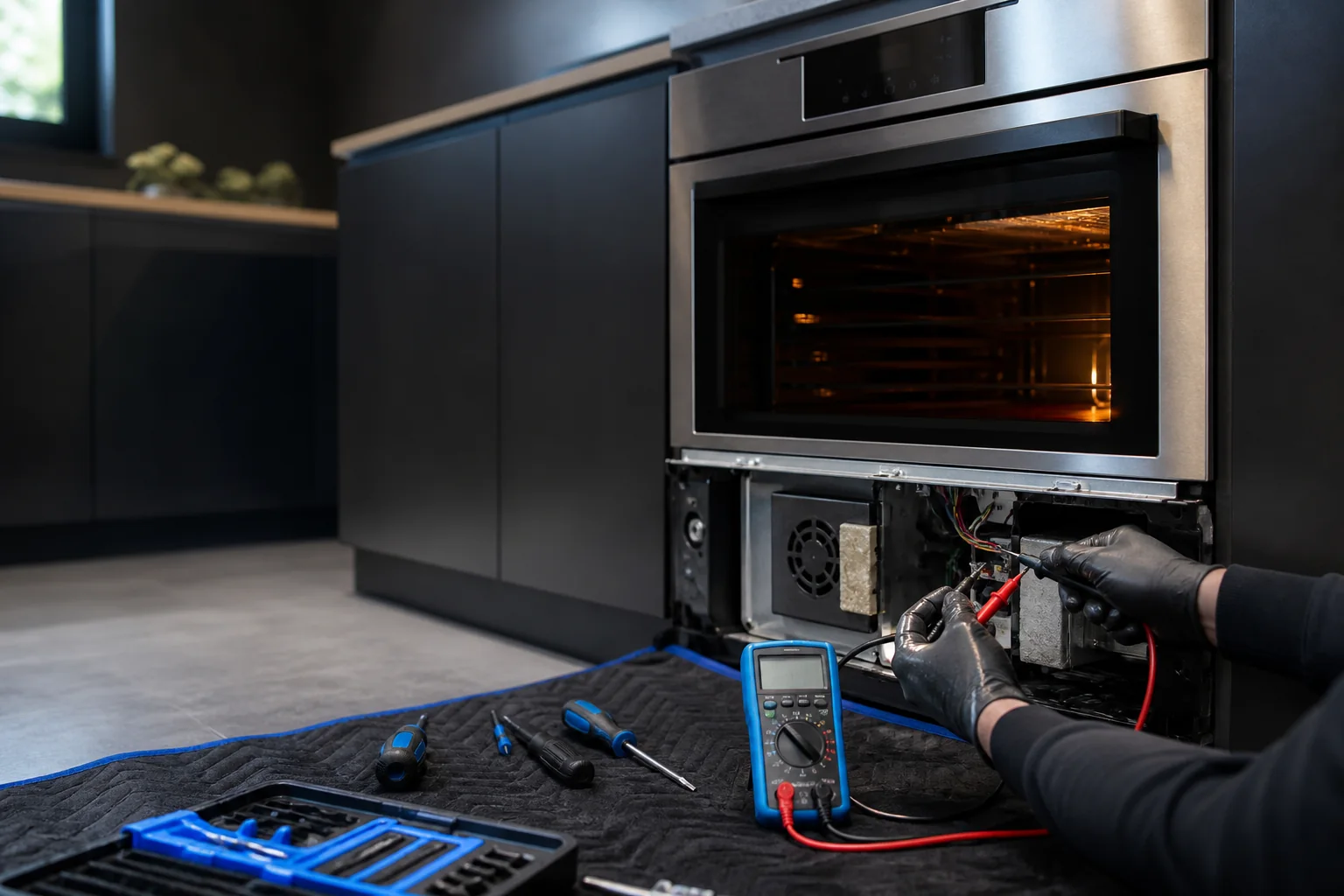
Accurate cooking depends on controlled heat, sensors, airflow or ignition, a sealing door, and responsive controls. Service checks how those systems work together before recommending parts.
An oven may heat slowly, overshoot, stay cool, display an error, fail to ignite, or cook unevenly. The diagnosis considers the heating source, temperature sensing, door seal, fan operation, wiring, control response, and the difference between indicated and measured conditions.
Wall ovens, freestanding units, dual-fuel installations, and tight cabinet clearances require different access plans. Missouri utility setups can include both gas and electric cooking equipment, so the fuel or power type and model information should be confirmed before the appointment.
Observed performance is compared with the appliance controls instead of judging by one cooking result.
Electric heating and gas ignition systems follow different diagnostic and safety steps.
Seals, hinges, sensors, fans, elements or burners, wiring, and controls are considered together.
Stop using equipment that is leaking, smoking, arcing, repeatedly tripping power, or creating a fuel odor. Address immediate safety concerns before routine scheduling.
The exact work depends on the appliance, access, diagnosis, and part availability. The recommended scope is reviewed before repair work proceeds.
Discuss My ApplianceUseful model information, clear access, and an accurate symptom history help the diagnostic process move efficiently.
Note the mode, set temperature, error code, and when the problem occurs. Stop use if you smell gas or see arcing.
The appropriate heating or ignition path, sensing, airflow, door, and controls are evaluated.
Approved components must match the model and temperature or electrical requirements; operation is then checked as appropriate.
Replacement components and installation materials must be appropriate for the appliance. A diagnosis determines what is actually needed.
Not sure whether this is the right service? Send the appliance type, model if available, a photo, and a short description so the team can confirm the best next step.
Ask about your appliance →These answers address common preparation, safety, and service questions for this appliance.
Ovens normally cycle above and below the set point, but large or persistent differences can involve calibration, sensing, airflow, heating, ignition, or control issues. Measurement over time is more useful than one instant reading.
Do not operate switches or create a flame. Leave the area and follow your gas utility's emergency instructions from a safe location. Appliance scheduling comes after immediate safety concerns are addressed.
A damaged seal can release heat and affect preheat or temperature stability, but elements, igniters, sensors, fans, racks, and loading may also contribute.
No. Leave the oven in its current condition and remove cookware only. Self-clean uses very high heat and may worsen some door, control, or heating concerns.
Tell us what the appliance is doing, where you are located, and when you would like service.