Heat plus airflow
Temperature and exhaust conditions are considered together instead of treating every slow cycle as a heater failure.
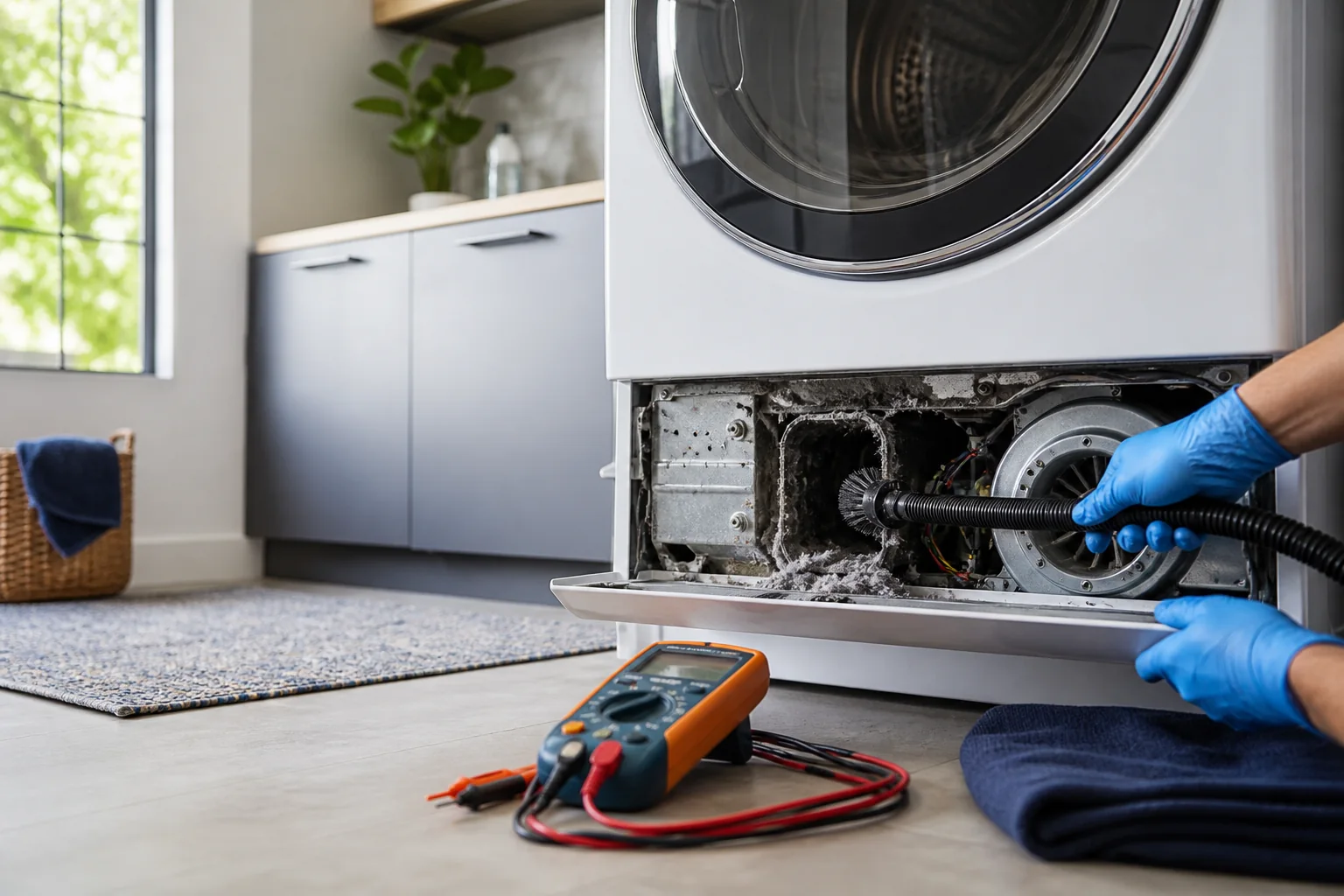
Drying performance depends on heat, drum movement, airflow, controls, and a safe exhaust path. The inspection looks beyond the symptom so a restricted vent is not mistaken for a failed heating part.
A dryer that runs but takes too long can waste energy and overheat clothing, while a unit that will not start may involve the door switch, power supply, motor circuit, control, or thermal protection. Service separates internal appliance faults from exhaust or installation conditions that need attention.
Long or concealed vent runs, exterior hoods, basement laundry areas, crushed transition ducts, and seasonal lint buildup can affect homes across the St. Charles region. Gas and electric models also require different safety checks and must be serviced with the correct utilities isolated.
Temperature and exhaust conditions are considered together instead of treating every slow cycle as a heater failure.
Rollers, idlers, belts, blower parts, and foreign objects are evaluated by when and where the noise occurs.
Power, fuel, venting, lint accumulation, and heat protection are part of the work plan.
Stop using equipment that is leaking, smoking, arcing, repeatedly tripping power, or creating a fuel odor. Address immediate safety concerns before routine scheduling.
The exact work depends on the appliance, access, diagnosis, and part availability. The recommended scope is reviewed before repair work proceeds.
Discuss My ApplianceUseful model information, clear access, and an accurate symptom history help the diagnostic process move efficiently.
Discontinue use if you notice smoke, a burning smell, visible scorching, or repeated electrical trips, and seek appropriate help.
Power or ignition, heat, drum movement, airflow, and safety devices are evaluated according to the symptom.
Approved work is completed or scheduled, then operation is checked without representing the appliance as a substitute for full home-vent maintenance.
Replacement components and installation materials must be appropriate for the appliance. A diagnosis determines what is actually needed.
Not sure whether this is the right service? Send the appliance type, model if available, a photo, and a short description so the team can confirm the best next step.
Ask about your appliance →These answers address common preparation, safety, and service questions for this appliance.
Restricted airflow is a common cause, but heating components, sensors, controls, loading, and washer spin performance can also affect cycle time. The appliance and accessible vent connection should both be considered.
The appliance connection and accessible lint path can be evaluated during service. Ask what vent work is included; long in-wall or roof-exit duct cleaning may require a dedicated vent-cleaning provider.
A squeak may come from worn drum-support parts, a belt system, or another moving component. Because continued use can cause more damage, schedule a diagnosis rather than relying on the noise alone.
Remove laundry and items stored on the dryer, then clear enough floor space to reach the unit and exhaust connection. Do not disconnect a gas line yourself.
Tell us what the appliance is doing, where you are located, and when you would like service.