Temperature evidence
Actual compartment conditions help distinguish airflow, defrost, control, and cooling-system concerns.
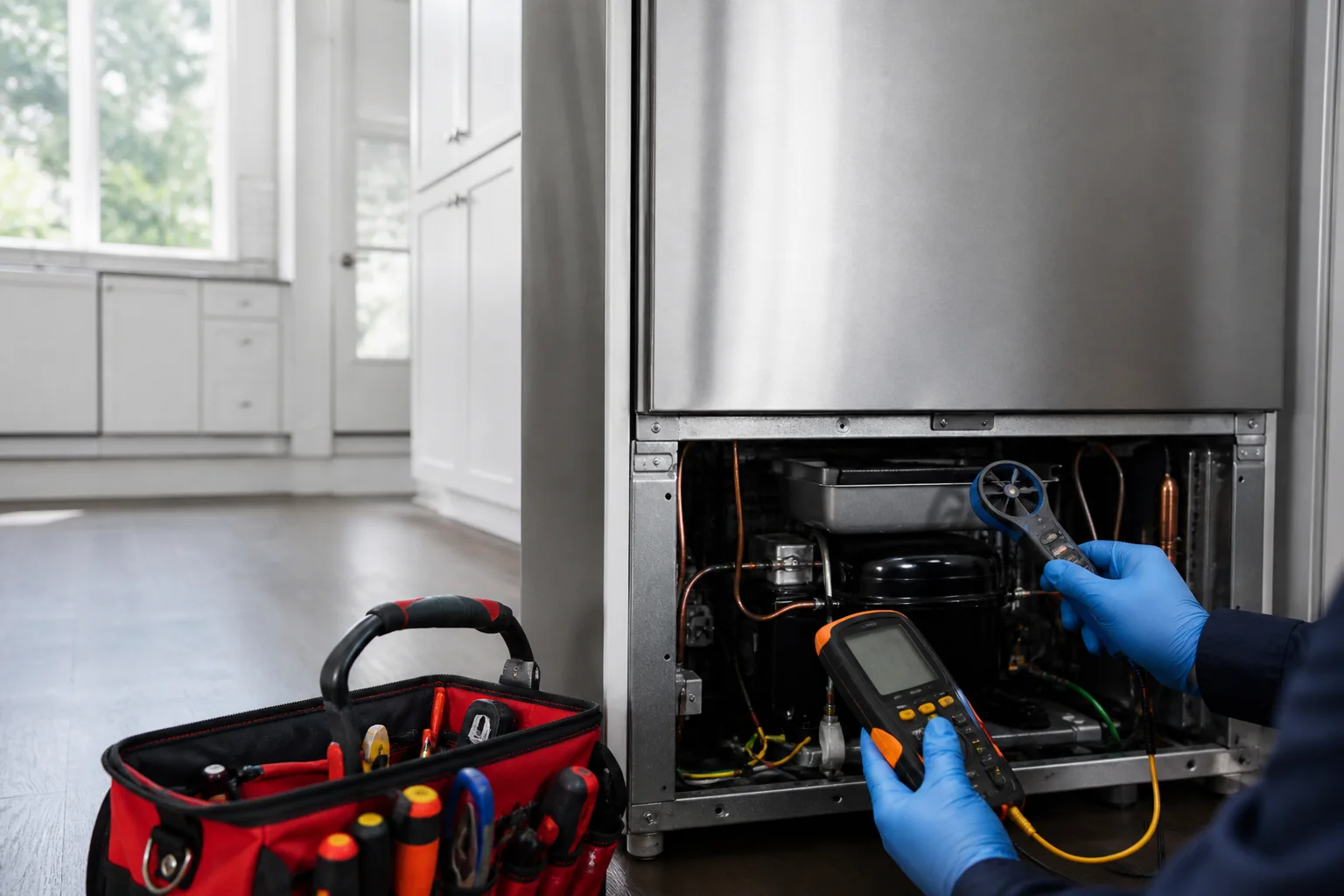
Cooling failures can involve airflow, defrost parts, sensors, fans, seals, controls, or the sealed system. A methodical inspection helps identify which condition is actually affecting the cabinet.
Refrigerator service considers both fresh-food and freezer temperatures, how often the unit runs, frost patterns, fan operation, door closure, drainage, and the condition of accessible components. Because different faults can produce similar symptoms, temperature readings and physical inspection matter more than replacing a part by assumption.
Warm Missouri summers, humid kitchens, dusty condenser areas, restricted ventilation, and frequent door opening can add load to refrigeration equipment. Hard floors and built-in cabinetry also affect how the unit can be safely moved and accessed during a visit.
Actual compartment conditions help distinguish airflow, defrost, control, and cooling-system concerns.
You receive practical guidance about limiting door opening and deciding what should be moved while the unit is unstable.
Floor protection, water connections, cabinetry clearances, and rear ventilation are considered before the unit is moved.
Stop using equipment that is leaking, smoking, arcing, repeatedly tripping power, or creating a fuel odor. Address immediate safety concerns before routine scheduling.
The exact work depends on the appliance, access, diagnosis, and part availability. The recommended scope is reviewed before repair work proceeds.
Discuss My ApplianceUseful model information, clear access, and an accurate symptom history help the diagnostic process move efficiently.
Limit door opening, note current temperatures, and move temperature-sensitive food if safe storage is uncertain.
Airflow, frost, drainage, controls, and accessible refrigeration components are checked in a logical order.
Authorized work is completed or scheduled, then key functions are checked. Full temperature recovery can take additional time.
Replacement components and installation materials must be appropriate for the appliance. A diagnosis determines what is actually needed.
Not sure whether this is the right service? Send the appliance type, model if available, a photo, and a short description so the team can confirm the best next step.
Ask about your appliance →These answers address common preparation, safety, and service questions for this appliance.
Keep the doors closed as much as possible and use a separate thermometer if available. Move perishable food to verified cold storage when temperatures are unsafe; service cannot guarantee food safety or prevent spoilage.
No. Frost can point to a door-seal, airflow, drain, sensor, or defrost-system issue. The location and pattern of the frost help narrow the cause.
Possible sources include the supply line, filter housing, drain system, ice maker, condensation, or another nearby fixture. Turn off the water supply if a pressurized leak is suspected and it is safe to do so.
That depends on the repair, room temperature, loading, and model. Many units need several hours to pull down; follow the technician's guidance and verify temperatures before relying on the cabinet for food storage.
Tell us what the appliance is doing, where you are located, and when you would like service.