Frost-pattern clues
Ice location and coverage can point toward air leaks, drainage, defrost, or cooling concerns.
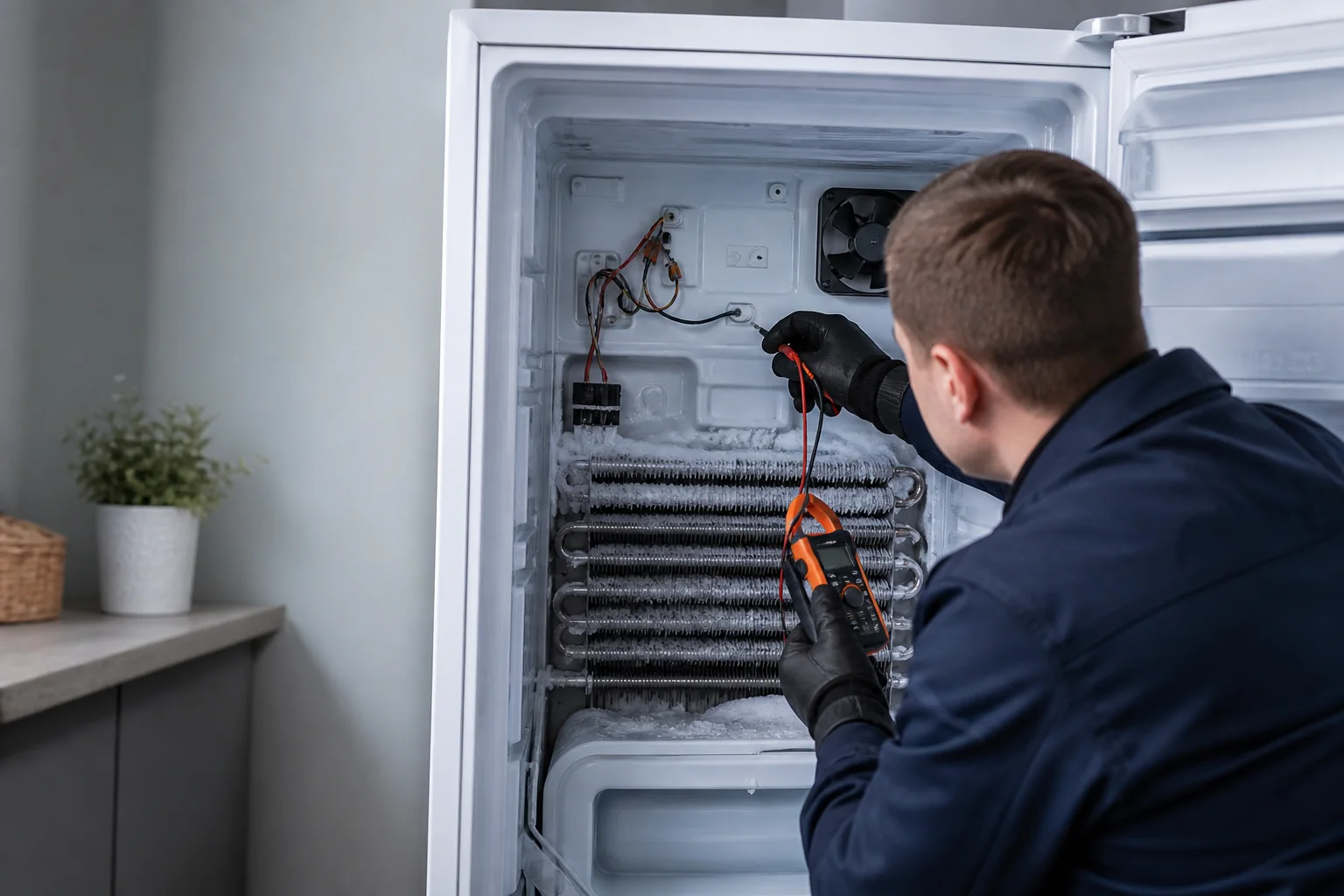
A freezer must maintain stable cold while managing airflow, moisture, defrost cycles, drainage, and door sealing. Visible ice patterns and temperature history offer important clues.
Freezers can warm because cold air is not moving, the defrost system is not clearing the coil, the door is leaking air, controls are not responding, or the refrigeration system cannot maintain load. The service visit uses the symptom and physical condition to narrow those possibilities.
Garage and basement locations around St. Charles may experience wider seasonal temperatures and higher humidity than conditioned kitchens. Clearance, dust, floor level, extension-cord use, and how full the cabinet is can all influence performance and safe access.
Ice location and coverage can point toward air leaks, drainage, defrost, or cooling concerns.
Room temperature, ventilation, electrical supply, clearance, loading, and door closure are included in the assessment.
You receive practical next steps while the unit's ability to hold temperature is uncertain.
Stop using equipment that is leaking, smoking, arcing, repeatedly tripping power, or creating a fuel odor. Address immediate safety concerns before routine scheduling.
The exact work depends on the appliance, access, diagnosis, and part availability. The recommended scope is reviewed before repair work proceeds.
Discuss My ApplianceUseful model information, clear access, and an accurate symptom history help the diagnostic process move efficiently.
Keep the door closed and move food to verified cold storage if the temperature is unsafe. Do not rely on appearance alone.
Temperature, frost pattern, door seal, airflow, drainage, controls, and installation conditions are evaluated.
Approved work is completed or scheduled. Temperature recovery is monitored according to the model and repair performed.
Replacement components and installation materials must be appropriate for the appliance. A diagnosis determines what is actually needed.
Not sure whether this is the right service? Send the appliance type, model if available, a photo, and a short description so the team can confirm the best next step.
Ask about your appliance →These answers address common preparation, safety, and service questions for this appliance.
Food-safety decisions depend on time and measured temperature, not just appearance. Consult current USDA guidance and discard food when its safety is uncertain.
Possible causes include an air leak, door issue, blocked vent, or defrost-system fault. The pattern behind the interior panel can provide additional diagnostic evidence.
Some models are designed for a wider ambient-temperature range than others. Check the manufacturer's installation limits; extreme heat or cold and poor ventilation can affect performance.
Ask first. Leaving the frost pattern intact can help diagnosis, but a severe ice block may require planned thawing before certain work can be completed.
Tell us what the appliance is doing, where you are located, and when you would like service.