Sequence-based diagnosis
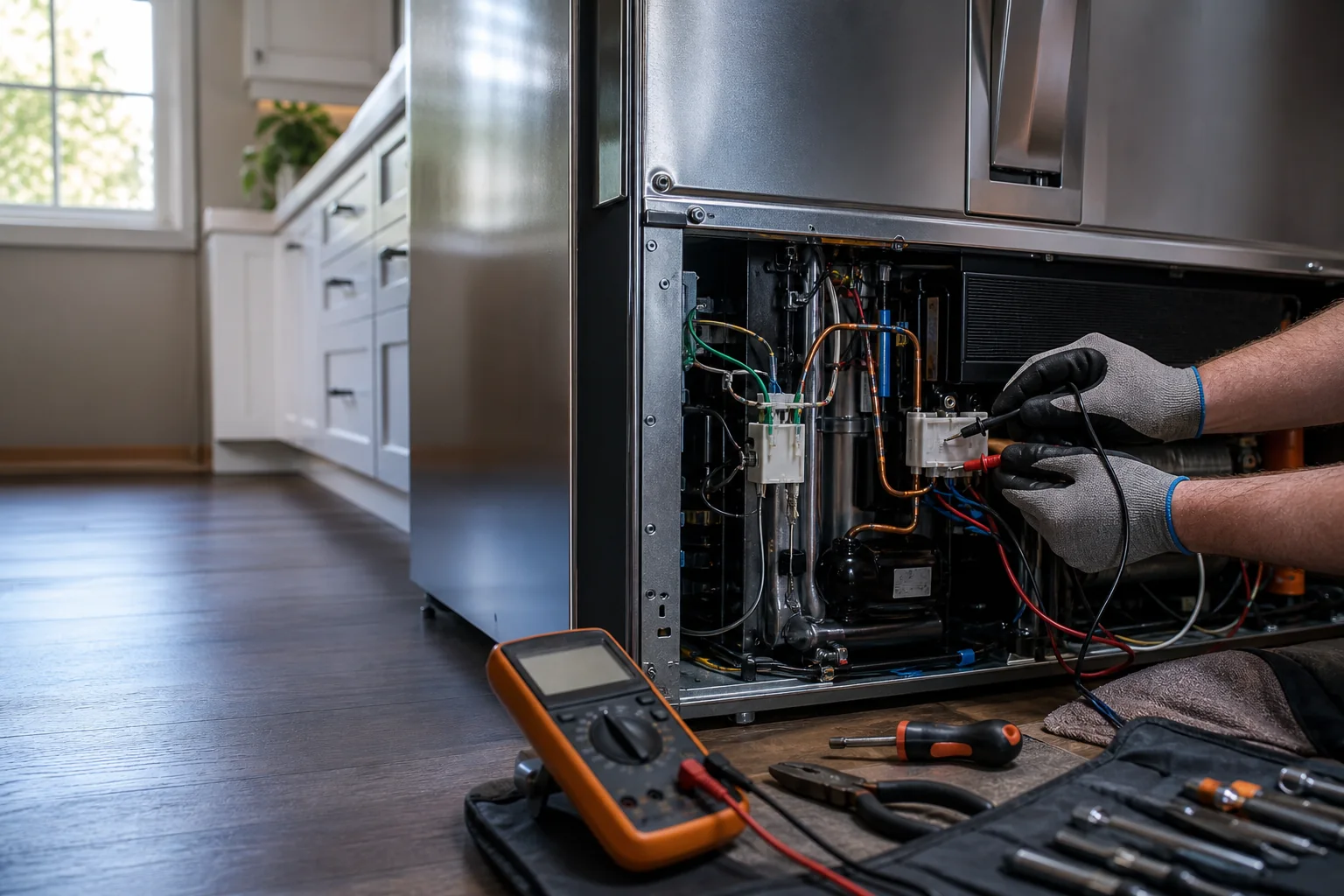
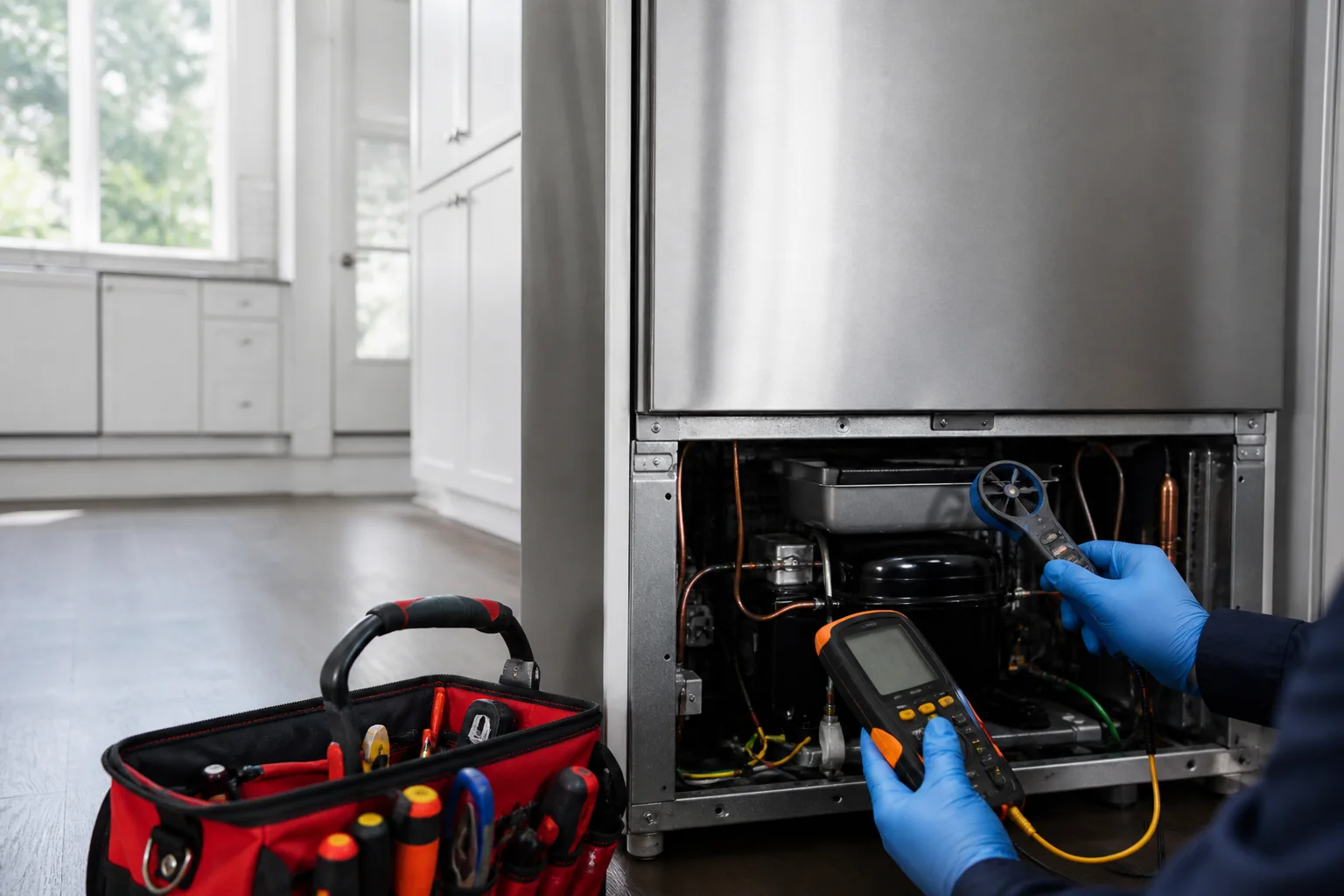
Temperature, water entry, fill amount, freezing, harvest, storage, and dispensing are checked in order.
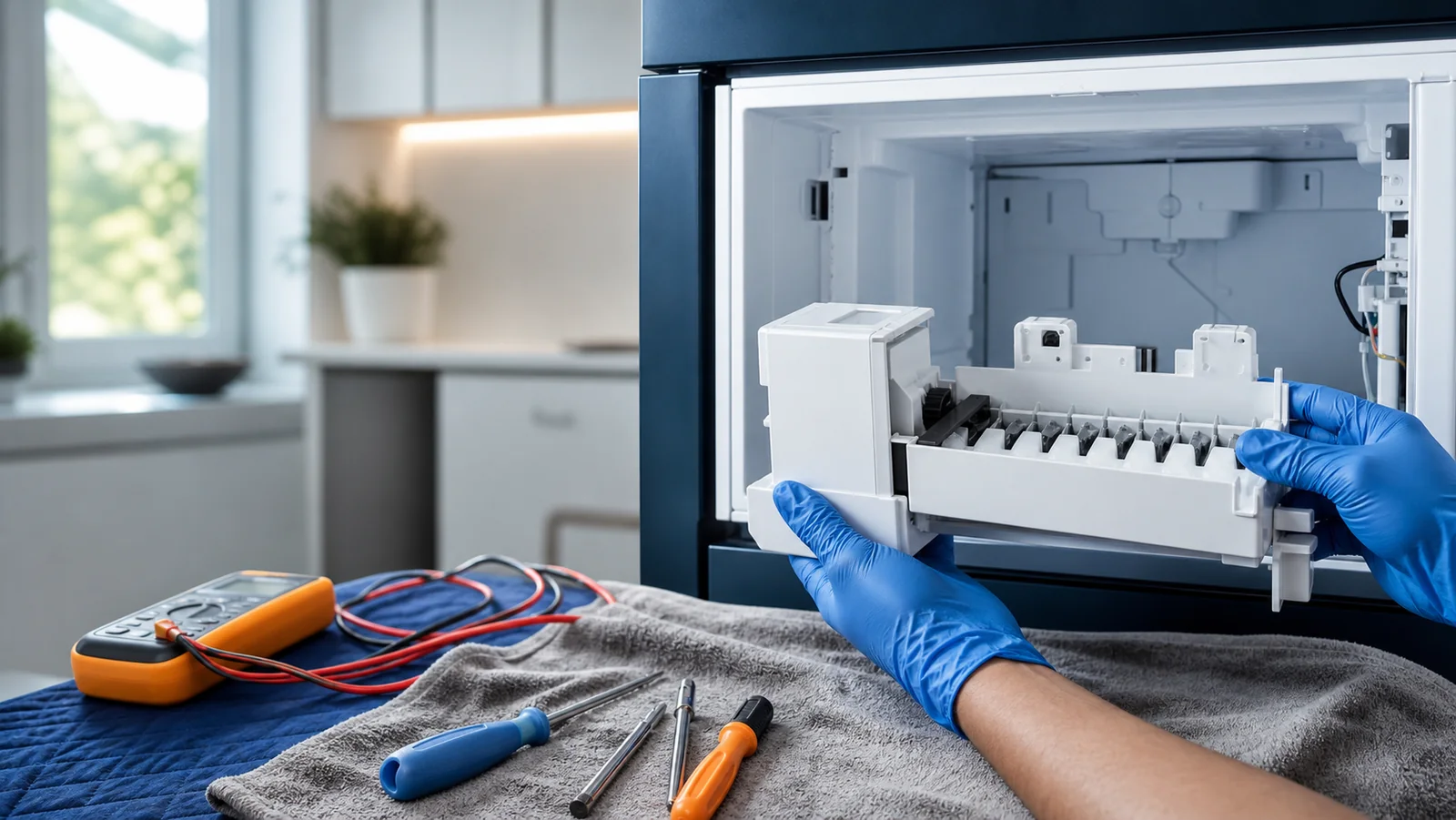
Ice production depends on cold-enough temperatures, controlled water fill, a clear mold or tray, a working harvest cycle, and proper shutoff sensing. The diagnosis follows that sequence.
No ice can begin with the freezer temperature, household water supply, filter, fill tube, valve, sensor, wiring, control, or the ice-maker module itself. Small cubes, clumping, overflow, and dispenser problems each point to different parts of the system and should not be treated as the same fault.
Hard-water scale can restrict fill paths and affect valves, filters, and cube quality in the region. Water shutoff access, refrigerator clearance, saddle valves, floor protection, and the relationship between freezer temperature and ice production all matter during service.
Temperature, water entry, fill amount, freezing, harvest, storage, and dispensing are checked in order.
Supply lines, valves, fill tubes, connectors, molds, and surrounding surfaces are inspected for water evidence.
The module is not automatically blamed when the actual issue begins with temperature, water, or controls.
Stop using equipment that is leaking, smoking, arcing, repeatedly tripping power, or creating a fuel odor. Address immediate safety concerns before routine scheduling.
The exact work depends on the appliance, access, diagnosis, and part availability. The recommended scope is reviewed before repair work proceeds.
Discuss My ApplianceUseful model information, clear access, and an accurate symptom history help the diagnostic process move efficiently.
Note whether production stopped suddenly or slowed, whether cubes changed, and whether any leak or noise appeared.
Temperature, supply, fill, freezing, release, bin sensing, and dispensing are checked against the symptom.
Authorized work is completed or scheduled. Because a full ice cycle takes time, final production may need to be confirmed after the visit.
Replacement components and installation materials must be appropriate for the appliance. A diagnosis determines what is actually needed.
Not sure whether this is the right service? Send the appliance type, model if available, a photo, and a short description so the team can confirm the best next step.
Ask about your appliance →These answers address common preparation, safety, and service questions for this appliance.
The exact time depends on freezer temperature, model, water supply, and the work performed. The first complete harvest may take several hours, and the bin can take much longer to fill.
A restricted, incorrectly installed, or incompatible filter can reduce water flow, but temperature, valve, fill tube, control, and module issues can produce similar symptoms.
Low fill volume, restricted water flow, filter condition, pressure, a frozen fill path, or timing issues can reduce cube size. The water system and fill cycle should be checked together.
Turn off the appliance water supply if you can do so safely, protect the floor, and stop ice production. Do not repeatedly cycle the unit to reproduce the leak.
Tell us what the appliance is doing, where you are located, and when you would like service.