Cycle-based testing
Fill, agitation or tumble, drain, spin, and safety functions are considered together.
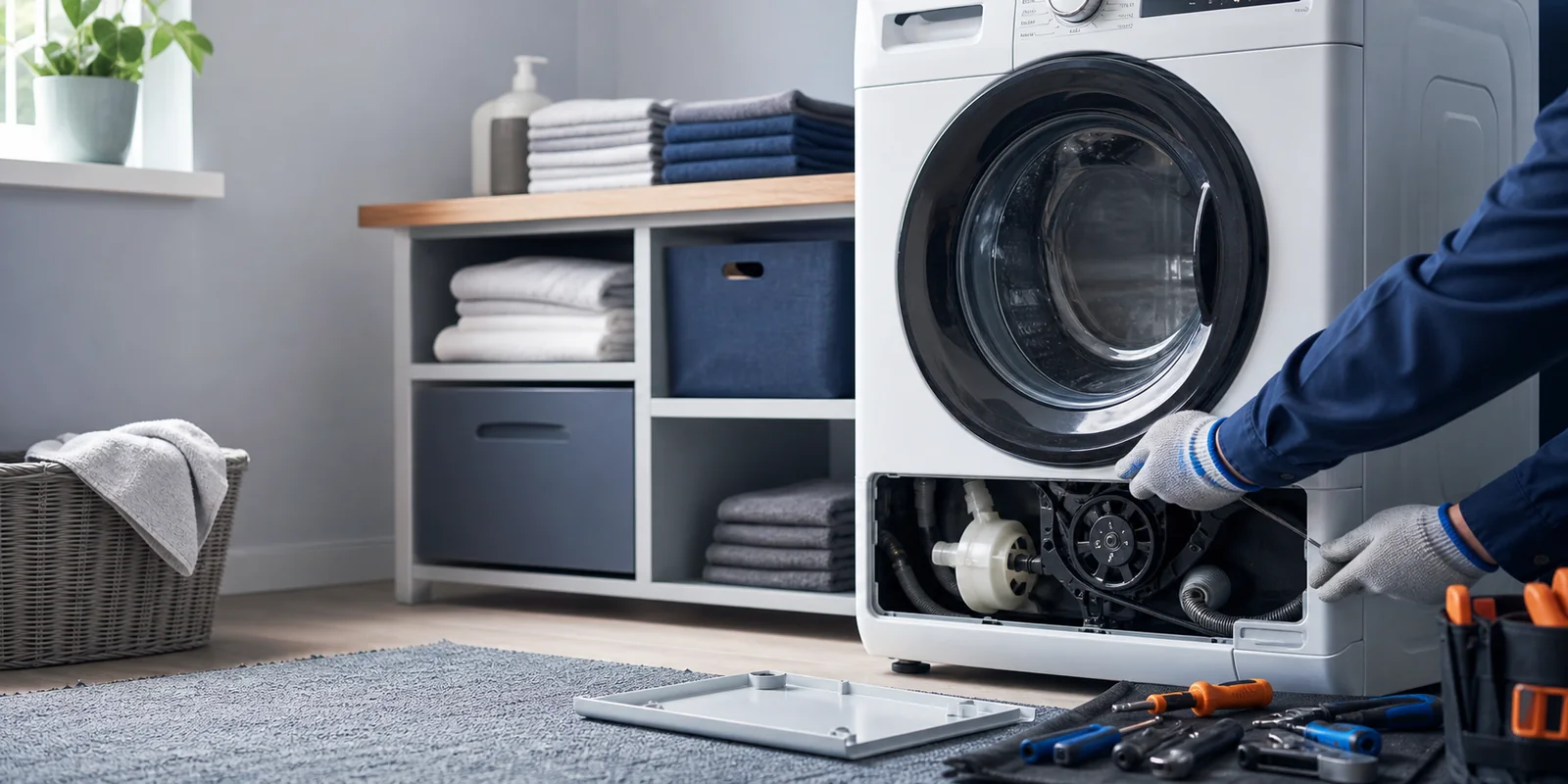
A washer depends on controlled filling, tumbling, draining, spinning, and door or lid safety. The service visit follows the cycle to find where the machine stops working as intended.
Front-load and top-load washers can show the same symptom for different reasons. A no-drain condition may involve a blockage, pump, wiring, or control; vibration may come from loading, leveling, suspension, bearings, or the floor. The diagnosis considers the full cycle and the installation around the machine.
Finished laundry rooms, stacked installations, basement drain setups, hard-water residue, and long drain-hose runs are common practical considerations in the St. Charles and St. Louis area. Clear access to the water valves, outlet, and machine sides can make the appointment more efficient.
Fill, agitation or tumble, drain, spin, and safety functions are considered together.
Hoses, pumps, seals, dispensers, and nearby plumbing are distinguished before a repair is recommended.
Leveling, drainage, supply lines, and clearance can be as important as internal parts.
Stop using equipment that is leaking, smoking, arcing, repeatedly tripping power, or creating a fuel odor. Address immediate safety concerns before routine scheduling.
The exact work depends on the appliance, access, diagnosis, and part availability. The recommended scope is reviewed before repair work proceeds.
Discuss My ApplianceUseful model information, clear access, and an accurate symptom history help the diagnostic process move efficiently.
Remove clothing, clear the top and nearby floor, and leave access to the valves and outlet when safe.
The failure point is reproduced when practical and the related mechanical, water, and electrical systems are checked.
The agreed repair is performed or scheduled, then the relevant portion of the cycle is checked for function and leaks.
Replacement components and installation materials must be appropriate for the appliance. A diagnosis determines what is actually needed.
Not sure whether this is the right service? Send the appliance type, model if available, a photo, and a short description so the team can confirm the best next step.
Ask about your appliance →These answers address common preparation, safety, and service questions for this appliance.
Stop the cycle and shut off the water valves if you can do so safely. Continued use can increase water damage and may make the original fault worse.
Load distribution, shipping hardware, suspension components, bearings, floor stiffness, and installation clearances can all contribute. A level cabinet is only one part of the diagnosis.
Yes. Many front-load machines keep the door locked when water remains in the drum. The cause can be a blockage, pump problem, pressure-sensing issue, or control fault.
Empty the machine, clear the laundry area, and provide the model number and any error code. Do not pull a stacked or tightly installed washer out yourself unless you can do so safely.
Tell us what the appliance is doing, where you are located, and when you would like service.